
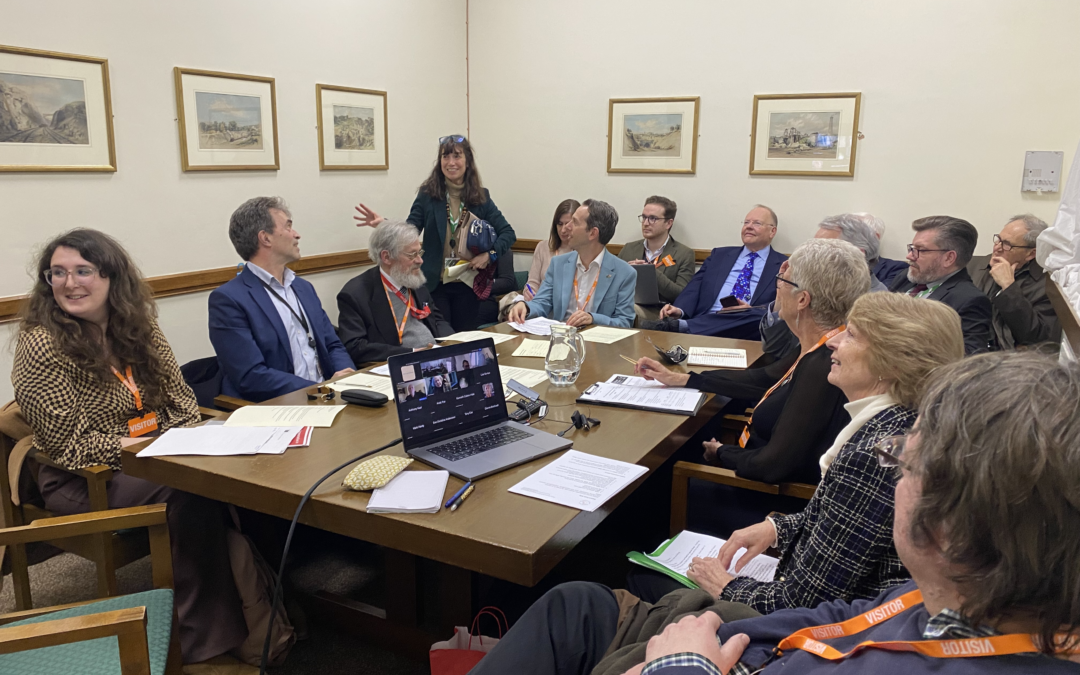
MP Manuela Perteghella welcomes everyone to the launch of the APPG on Citizens’ Rights
APPG on Citizens’ Rights sees new officers voted in
By Else Kvist
The APPG on Citizens Rights, which looks at challenges facing EU citizens in the UK and Britons abroad, has been successfully launched in the House of Commons.
Manuela Perteghella MP (Lib Dems) welcomed everyone to the meeting before Chair of New Europeans UK, Dr Ruvi Ziegler, oversaw her election as Chair of the APPG. New Europeans UK, a citizens’ rights charity, holds the secretariat of the APPG, which meets regularly at Parliament while also holding meetings online.
Once Manuella Perteghella had been voted in as Chair of the APPG, by the other parliamentarians present, she oversaw the election of other officers to the APPG: Baroness Goudie (Labour), Lord Balfe (Conservatives) and James Asser (Labour).
The parliamentarians attending the meeting on January 15th included: Manuela Perteghella MP, Martin Wrigley MP, James Asser MP, Lord Rennard, Baroness Hamwee, Lord German, and Baroness Pidgeon.
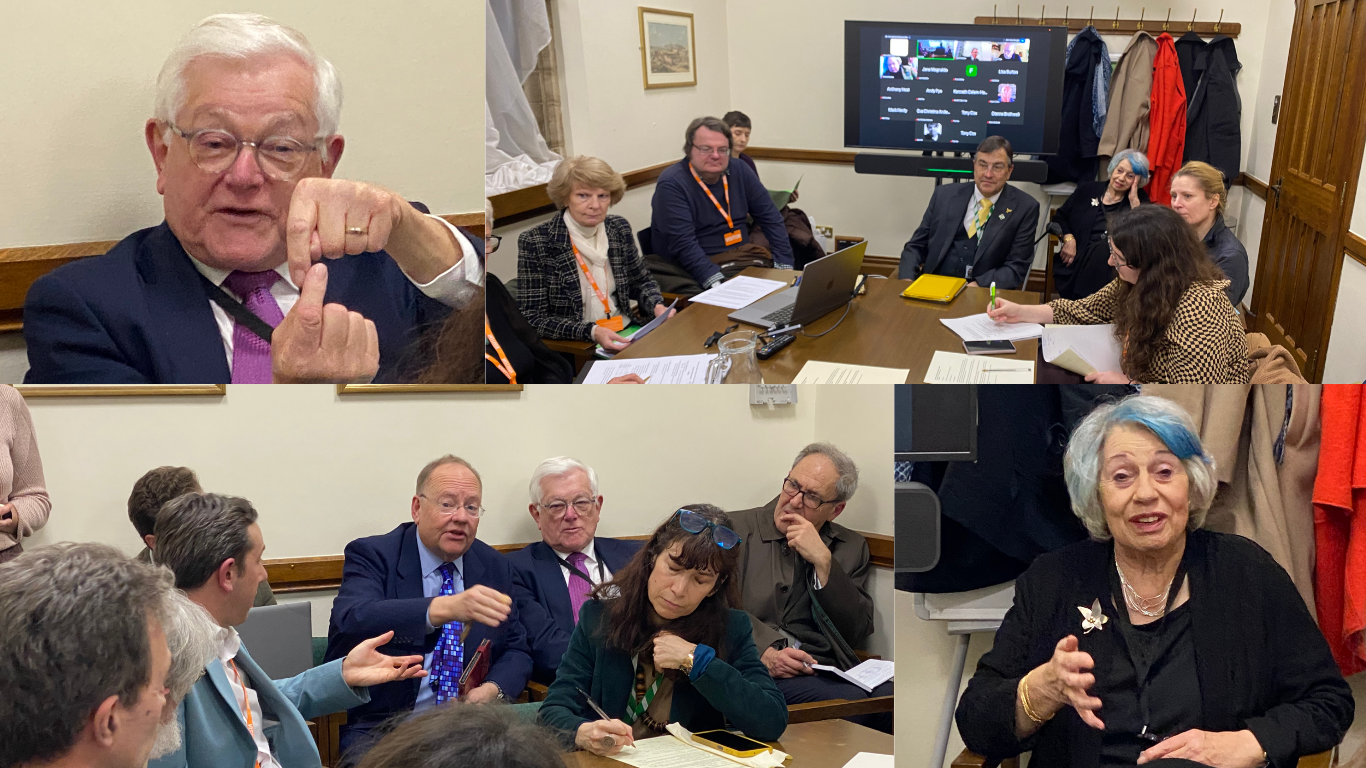
Postal vote survey presented to Parliament
The meeting then heard from Tom Brake, Director of Unlock Democracy and former Liberal Democrat MP, who presented the results of a joint survey between Unlock Democracy, New Europeans UK and the British Overseas Voters Forum. The three groups teamed up to conduct a survey, during last summer’s General Election, into how well the postal vote system performed for Britons living and working abroad.
The last General Election was the first in which all adult UK citizens abroad could vote in Westminster elections, following the abolition of the so-called ‘15-year-rule’.
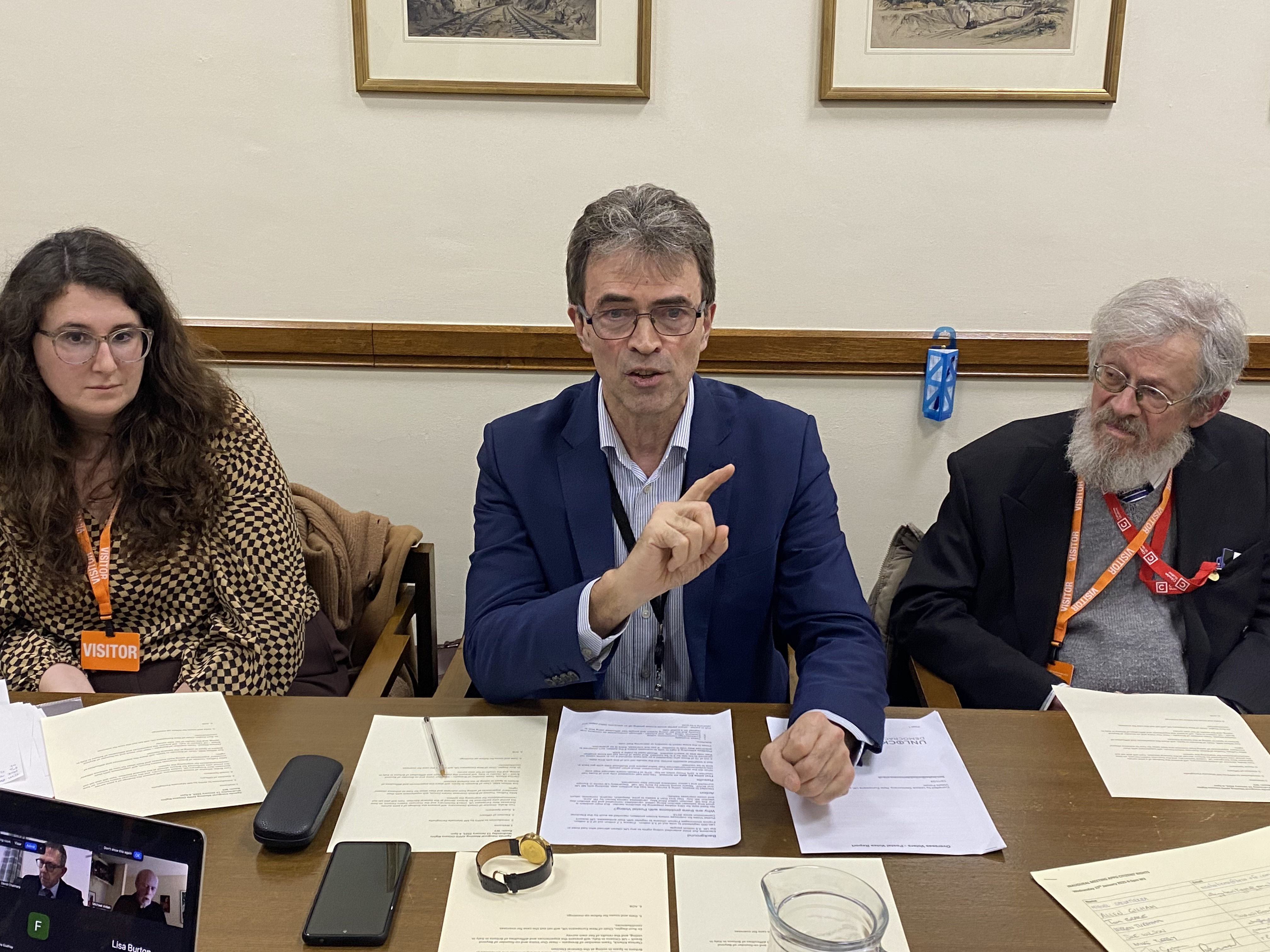
Tom Brake, director of Unlock Democracy, presents the results of our joint survey
Tom Brake started by pointing out that the Electoral Commission had been flagging “huge problems” with the postal vote system for overseas voters since 2015 or even earlier. Only 190,000 UK citizens abroad were registered to vote at the last General Election – out of 3.5 million people living or working abroad. Whereas in France, there were 1.7 million people registered to vote out of 2.5 million French people living abroad. This means five percent of UK citizens abroad were registered to vote compared to 68 percent for French citizens abroad. “Clearly that flags that there is an issue with UK citizens voting from abroad,” Tom Brake said.
The problem with the postal vote, Tom Brake said, is that by the time a candidate has been selected and their name has been printed on a ballot paper, there is typically only about four weeks left until the date of the election.
“If you are an overseas voter, good luck if you leave it a couple of days before getting in touch with your local authority to ask them to send your postal vote. The reality is that if the postal vote was not with you by 27th of June for the last election, then you were very unlikely to have your vote counted. Many of the people who voted on the 27th of June or afterwards wouldn’t have known if their vote counted, as the only way of finding out if your vote actually counted is to make a ‘subject access request’ to your local authority to ask them if my vote was actually counted,” Tom Brake explained.”
Tens of thousands of postal votes didn’t count
Looking at our survey, Tom Brake said: “We had enough data from France to work out what was happening to postal voters. For France, the number of people who received their postal ballot after the 27th of June was 35 percent, and we reckon that probably none of those votes actually counted – as they had to be posted and make their way through the postal system, and arrive at the local authority in time to be counted. For the rest of the world, 45 percent of the people surveyed received their ballot paper on the 27th of June or afterwards, and therefore it is very unlikely that their votes would have been counted. In other words, for four out of ten people, who think they cast their vote, their vote probably didn’t count. Our figures are not that different to the figures which the Electoral Commission have produced in terms of their analysis of what happened with overseas votes.”
So what is the solution?
There are different views as to what the solutions could be, Tom Brake explained. “You could slightly tweak the election timetable, and you might gain a few extra days, but frankly, I think the evidence suggests that even then, lots of people will still find that their vote is not being counted. The other option, which the Electoral Commission has proposed, is that people could go to their embassy or high commission. They could perhaps receive their vote there through the diplomatic mailbag, fill it in and send it back through that route. Or perhaps they could print it off at the embassy or high commission before it’s filled in and sent back by post, so you cut out the time it would take in the normal post. Maybe that’s a partial solution.
“But I think undoubtedly, the only real solution, and that is why you saw a 68% turnout for the French in their elections, is electronic voting, which would guarantee your vote being counted. Liberal Democrats in Europe, for example, don’t support that idea. I think Unlock Democracy would support it, but of course, that then introduces a two-tier system unless you do the same for UK based voters.
“But we do need to find a solution, because when as many people as that are not registering to vote, and if they are registering and voting, are finding that their votes do not actually get counted, then that is a major failing in our democratic system. And given overseas voters have been given the right to vote, the government should do what it takes to ensure they are able to exercise that right,” Tom Brake concluded.
The view of British Overseas Voters
Mike Tuffrey, board member of the British Overseas Voters Forum (BOVF), then addressed MPs and Peers and others present. BOVF was set up to champion the issues of concern to Britons overseas, ranging from UK banks closing their bank accounts to frozen pension and earnings thresholds for returning to the UK with a foreign spouse and UK university fees for children of Britons overseas.
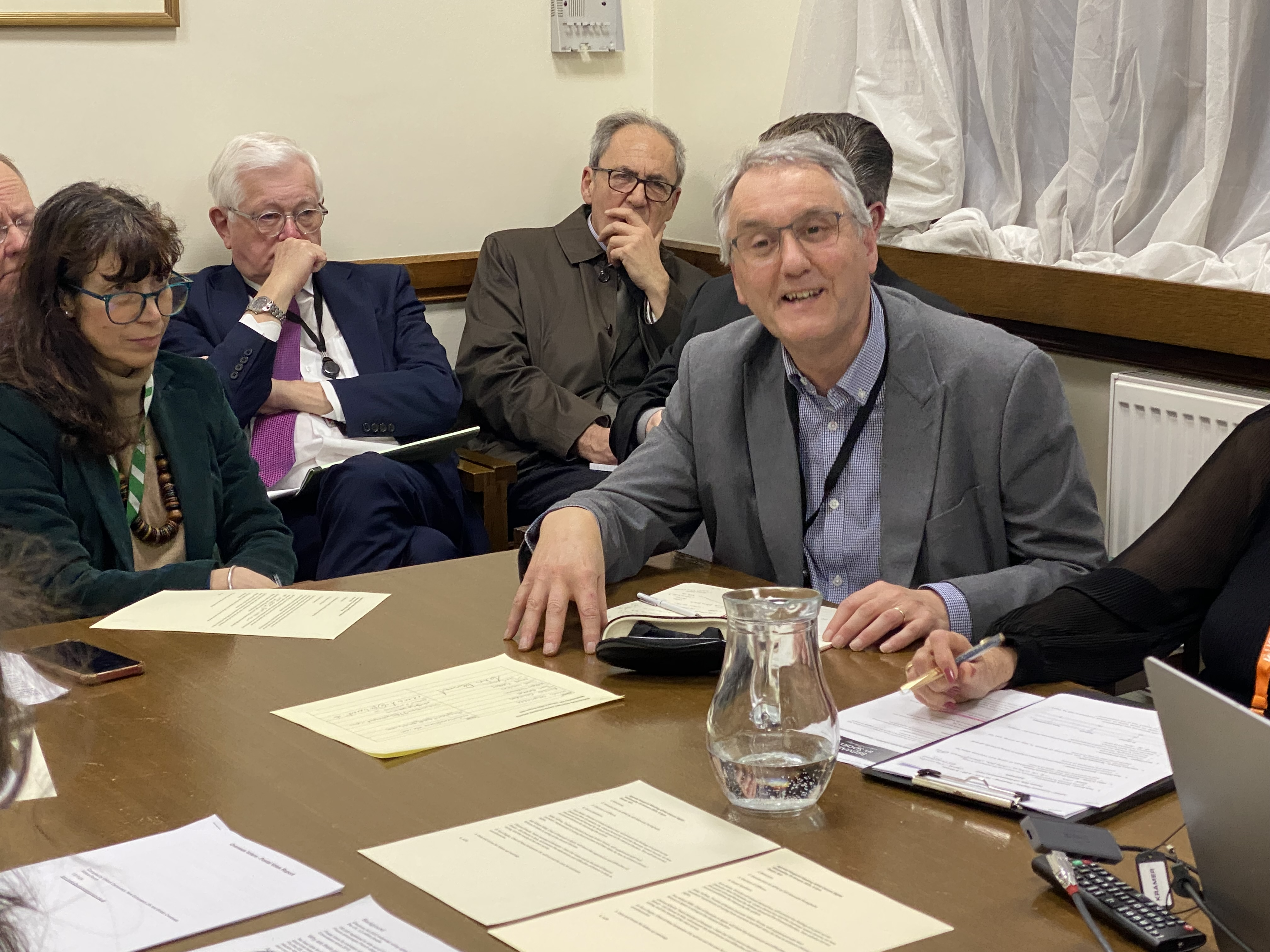
Mike Tuffrey, trustee of the British Overseas Voters Forum
Why don’t more Britons overseas vote?
Mike Tuffrey said the number of overseas British voters should be several million instead of a couple of hundred thousand. He then set out some explanations for this. Number one, he said, is limited publicity. “If you don’t know that you have a right to vote, then you cannot even start the process. We surveyed a small sample of our members, about 18 of them. Only two had heard about the right to vote from the Electoral Commission, so there is an issue with what they are doing to publicise this. Only four heard about it through the embassies and the embassies seem to take a very limited view of their responsibilities.
“Most heard about it through word of mouth, friends and family, and we should not have our democratic rights dependent on people’s uncles saying on social media: ‘By the way, you should vote,” Mike Tuffrey said.
He then set out a second issue. “Number two is that when you try to talk to your electoral officer, then you need a good service. A lot of people at the electoral office simply didn’t know what to do. Our members had to explain the rules to them, so there is an information job for the local authorities. There is a particular problem around proxy votes, even getting that registered proved difficult, so that process needs looking at too.”
The third issue relates to postal delay. “We had one member where the ballot paper literally arrived the day before the election. He said even if I put this on FedEx and flew my ballot paper back to the UK, it would not arrive by 10pm on the day of the election. So it’s completely crackers,” Mike Tuffrey said.
What should be done about it?
“All we need to do is look at other countries, this is not rocket science, there is plenty of experience out there of countries that make this work,” Mike Tuffrey said.
“There is a role for the embassies, whether it is sending back the postal votes or setting up a polling station at the embassy. Embassies may say this is not our job, but actually we should say that embassies do have a role for Britons overseas.
In terms of electronic voting, the Dutch can get their vote through a secure portal, print it out and post it back. So that at least takes half the time out of the process.”
But ultimately, overseas constituencies are the answer, Mike Tuffrey said, which Dr Ruvi Ziegler, Chair of New Europeans UK, spoke about later in the meeting.
A mixed yet similar picture in Spain
Next up was Sue Wilson MBE, Chair of Bremain in Spain, who pointed out that Spain has the largest group of Britons overseas. “The issues in Spain are no different to elsewhere, such as in Italy and France, so it’s just the scale of the problem,” she said. “We did find that the main issue was getting the voting papers in time and in many cases, despite the encouragement that was given from all sectors for people to register in very good time ahead of the elections, there were still people who were registering once the election was announced.
“So with that process alone taking anything up to four weeks, any chance of taking that any further and getting a postal vote or proxy vote was already out the window, as the whole process had been started too late.”
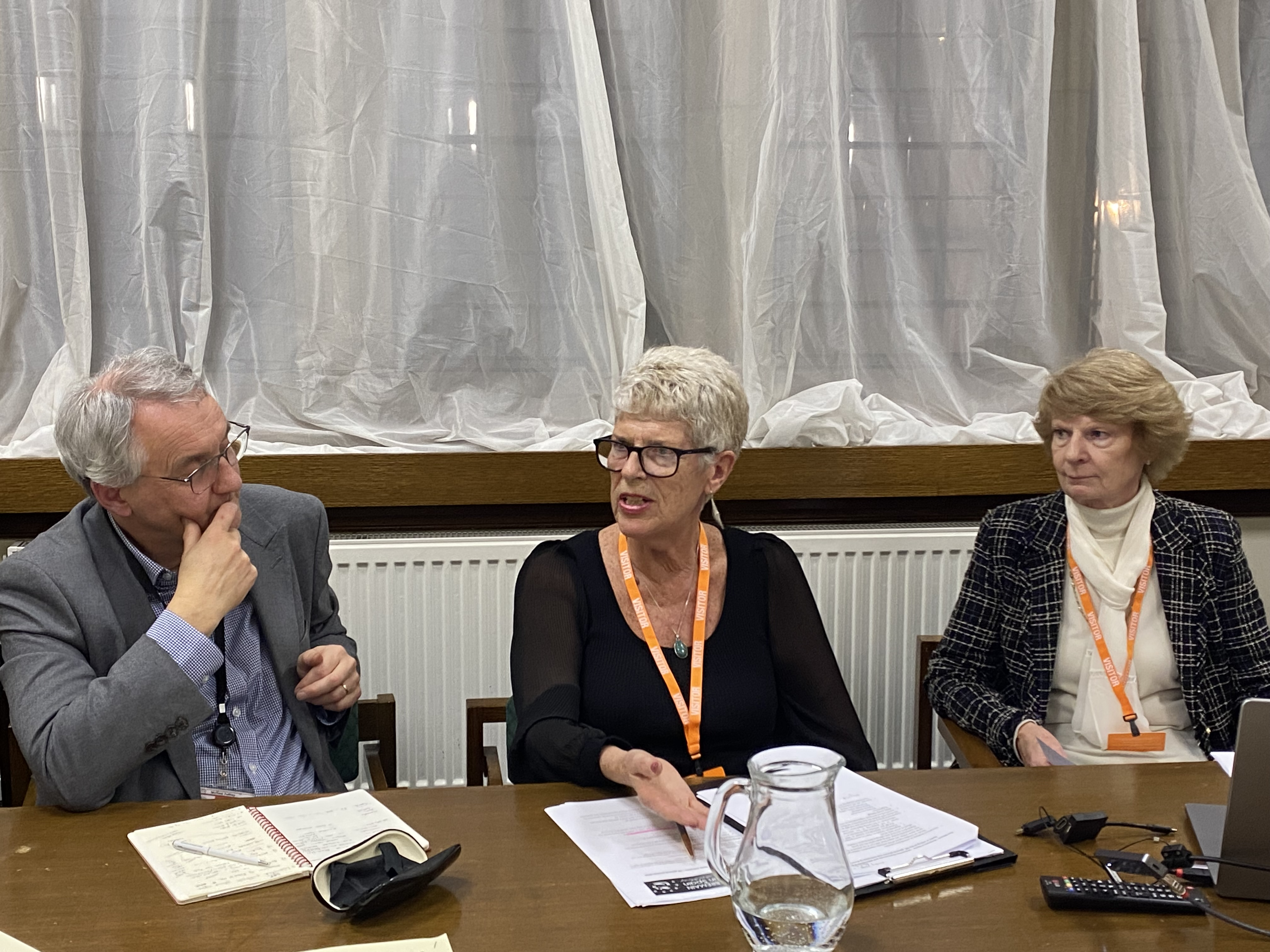
Sue Wilson MBE, Chair of Bremain in Spain, addresses the meeting
The problem of people not receiving their ballot papers in time, seemed to be an issue across all regions of Spain. But we did find many examples, surprisingly, of two people living in the same house or from the same family, applying for a postal vote at the same time and only one of them getting a response, and even in most cases that response was probably not in time. The postal system between the UK and Spain is dire at the best of times and even worse since Brexit,” Sue Wilson said.
Bremain in Spain put “a great deal of effort” into discouraging people from relying on the postal system and encouraging people to have a proxy vote, Sue Wilson explained. “But even that system was being held up with delays and if there are any issues with the proxy voter not being available, then the proxy voter has to apply for a postal vote, which complicates the process even further.”
Is online voting the answer?
Sue Wilson agreed with the previous speakers that halving the process by at least allowing people abroad to download the voting papers online, so they would only have to post the form in one direction, would help, as well as involving the embassies in some way. She summarised by saying it’s a case of extending the deadline and simplifying the process. But she also agreed that electronic voting would be the ideal solution. “You can apply to vote online, and you can do your taxes online, so why can’t we vote online?” Sue Wilson asked.
Sue Wilson also pointed out that another reason why so many French people abroad vote could be that they have overseas constituencies to represent them.
A third of Italians overseas use their vote
Clarissa Killwick, a team member of Brexpats – Hear Our Voice and co-founder of Beyond Brexit – UK Citizens in Italy, spoke next. She started by explaining that the system is different for overseas Italians, as they are already automatically registered to vote by being on a register for Italians living overseas.
“This means they automatically receive their ballot papers, and the turnout for voting has averaged 30% since they have had their own constituencies for the past 20 years. Originally it was about 40%,” Clarissa explained.
“But they only have a postal vote, and they do have problems, similar to ours. Sometimes it could be because they haven’t updated their records, so the ballot goes to an incorrect address or someone has died, and some of the ballot papers don’t turn up at all,” Clarissa pointed out. However, it is understood by Massimo Ungaro, former MP for overseas constituencies, that Italy is now looking at electronic voting.

Sue Wilson, Chair of Bremain in Spain, with Clarissa Killwick, co-founder of Beyond Brexit
Postal survey among Britons in Italy
Clarissa Killwick carried out her own poll among her citizens’ rights group of Withdrawal Agreement beneficiaries. Among them, 51% chose a postal vote and of those only 50% arrived in good time.
“So that made us worse than France, but not as bad as the average for the rest of the world, which I think for some people in Italy would be a surprise. -There are lots of things to love about Italy, but unfortunately not the postal system. We were, however, the worst for ballot papers that never arrived and that is even after six months. So that’s not going to be fixed by tweaking the timing,” said Clarissa Killwick.
Among those she surveyed, 44% chose to use a proxy, or they tried to use a proxy, Calrissa Killwick explained. “It had a better success rate. About 11% of them had problems too and some people actually said they switched to using a proxy because they had problems with the postal system in the past and didn’t trust it. But the problems people had, where they applied for a postal proxy because they didn’t know anyone in their own constituency, included papers never arriving with their proxy or going to the wrong address. The remaining 5% were those who voted in person, like Clarissa Killwick herself, who travelled to the UK especially to make sure her vote was counted.

Clarissa Killwick outside her polling station in Wimbledon
Barriers to voting
People complained of the processes being very cumbersome and didn’t realise they had to apply separately for a proxy, Clarissa Killwick said.
“There were too many hoops to jump through and what the figures don’t show is all the time and effort, the emails and the phone calls, and the sheer frustration people felt. Some people started the process early as they were really motivated, but even then it still often came to nothing, including their complaints afterwards to their constituencies.
“It makes our vote look very fragile. At the end of the day, I have a vote, but I haven’t really got representation, so it’s not going to be anything more than symbolic until we get our own representation,” Clarissa Killwick concluded.
This then led to Dr Ruvi Ziegler, Chair of New Europeans UK, who made the case for overseas constituencies.

Dr Ruvi Ziegler, Chair of New Europeans UK, makes the case for overseas constituencies
Campaign for overseas constituencies
Dr Ruvi Ziegler started by pointing out that New Europeans UK campaigned for many years to have the ‘15 year rule’ removed that barred overseas voters from voting after more than 15 years living or working abroad. The logic of having overseas constituencies has become even clearer since then, he said.
“People vote in the last constituency where they were registered to vote before leaving the UK or the last address they resided at – and that MP who represents them has no particular knowledge of the circumstances of their lives, whether it is in north-west Europe, Australia or Canada. By definition, they are a very small percentage of the constituents that MPs have to represent, so their concerns are dwarfed by all the other issues their MPs have to deal with,” Dr Ruvi Ziegler explained.
Overseas constituencies exist in 17 countries globally, such as France and Italy. These exist both in countries with proportional representation or mixed representation and a first past the post system. “In a first past the post system, you can simply create overseas constituencies that represent certain areas of the world. In our view, once the system is established, you can have the electoral commission set up the boundaries for the different regions,” Dr Ruvi Ziegler said.
Our campaign for overseas constituencies is very much driven by “a sense that people do not feel represented or that their vote counts”, Dr Ruvi Ziegler said.
Dr Ruvi set out three main arguments for the introduction of overseas constituencies. The first one related to aligning the concerns of constituents.
“It’s best illustrated by Brexit. There are very clear concerns for British citizens living in the EU, who are no longer EU citizens and who have very specific concerns relating to their status – which are different to those of Britons living elsewhere in the world, let alone British citizens living in the UK. So if you had an MP dedicated to a particular overseas constituency, then their mailbox would be filled with very similar requests of which they would acquire continuous expertise and ability to address.”
The second point related to better use of resources. “It just doesn’t make sense to have 650 MPs dealing with different issues relating to people living abroad in each of those constituencies – rather than having a set of MPs who are dedicated to these very specific tasks.
“Finally, it simplifies things in relation to our discussion on the postal ballot. Imagine if you had a Brussels or a Washington hub, and you would send your ballots to one place rather than having to reach 650 different places across the UK. It would be geographically closer and makes more sense in terms of centralisation.”
Getting political parties onboard
“It is already Liberal Democrat policy, but as far as I’m aware, it is not an official policy of any other UK-wide party. But being an all-party parliamentary group, we would very much like that to become the case, and we think there is a very strong argument for it. We think what has been illustrated by the postal vote scandal is that it’s not just the moral thing to do, it is also the practical thing to do, Dr Ruvi Ziegler concluded.
The presentation was followed by questions and answers.

Lord Rennard and Lord German sit behind MP Manuela Perteghella at the meeting
Lord Rennard said that he didn’t believe this government or any party would agree to electronic voting for overseas voters, when we don’t have it for domestic voters. “But, it would be a very practical idea for overseas voters to be able to download their ballot paper and post it back to their embassy or consulate, which would then post it in the diplomatic postal bags in time to be counted in the UK,” he suggested.
Our APPG chair, Manuela Perteghella, also reflected on the need to look at ways of raising awareness among overseas voters of their right to vote – after Tom Brake had pointed out that ten times as many overseas citizens register to vote in France.
Tom Brake said that it’s very clear from surveys that UK embassies and consulates do “virtually nothing” collectively compared to embassies of many other countries, so a “more proactive role” for them is also missing, Tom said. Other countries register their citizens at the embassy, so they have their email address for when information needs to be shared, he explained.
The upcoming Elections Bill, could introduce voting at age 16, which the government has said it’s committed to bringing in. Hence, it was concluded that this should give us an opportunity to raise some of the issues raised at this meeting and the chance to try and make amendments to the bill.
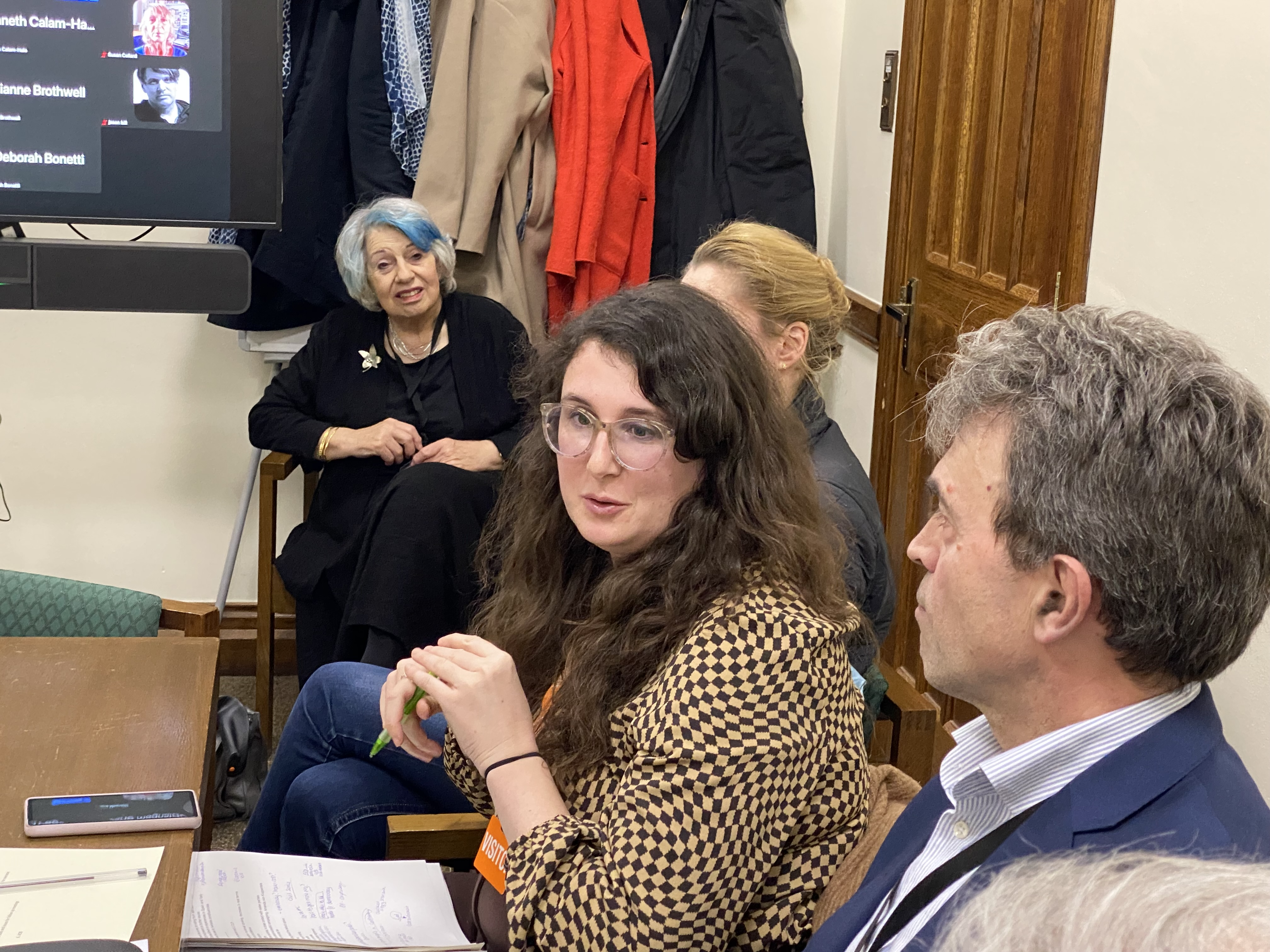
Imogen Tyreman from Labour Internationals travelled from Belgium to attend the meeting. LI also supports overseas constituencies.
To find out more about our campaign for overseas constituencies visit our webpage:
